
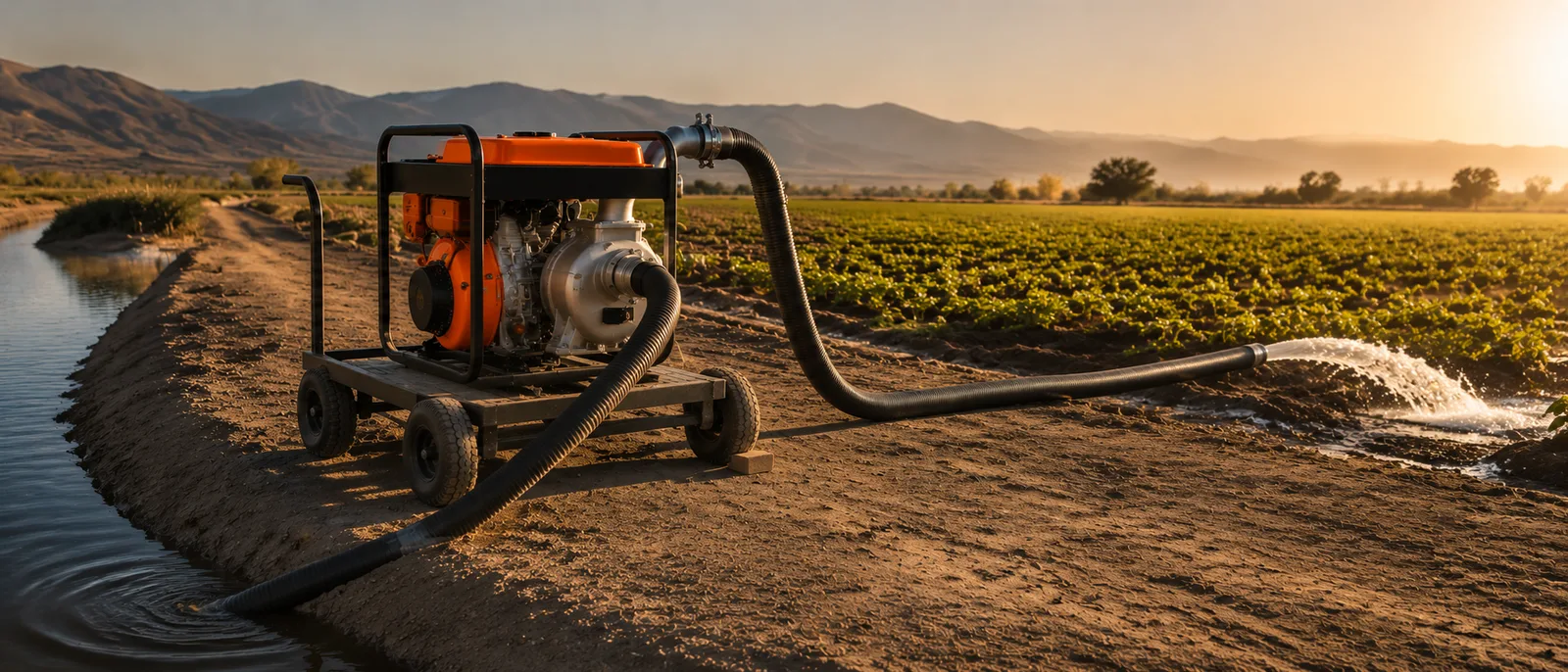
Irrigation
Diesel pump sets that move water on the crop's schedule — matched to flow and head for furrow, sprinkler, and drip systems, far from any power line.
- Standard and high-pressure sets for flow or head
- Self-priming options for canal and river intakes
- Field-serviceable engines with common spare parts
The challenge
Irrigation runs on a deadline: when the crop needs water, the pump must start, deliver its flow, and keep delivering through the whole season — often kilometres from the grid. An undersized pump starves the sprinklers; an unreliable one costs the harvest. HTX diesel pump sets are matched by flow and head, start dependably in the field, and are built to be serviced with basic tools.
What an irrigation pump has to deliver
An irrigation pump is sized from the field. The area and the crop's water need give the flow. The irrigation method gives the pressure. The lift from the water to the highest outlet, plus pipe friction, completes the total head.
Furrow and flood irrigation is a flow problem: a lot of water at low pressure. Sprinklers turn it into a head problem: they need roughly 20 to 40 m of pressure. Drip sits between, at about 10 to 20 m.
Matching the pump to the field
Areas below assume 6 mm of water a day pumped in a 6-hour shift. One millimetre over one hectare is 10 m³.
| Field and method | Rated duty | HTX models |
|---|---|---|
| Up to 2 ha, furrow or drip | 20 m³/h at 20 m head | HTX-WP20 |
| Up to 4 ha, furrow, canal or river intake | 40 m³/h at 18 m head | HTX-WP30 |
| About 5 ha, low lift, ditch or drainage | 50 m³/h at 10 m head | HTX-WP40 |
| Up to 13 ha, furrow or flood, low lift | 130 m³/h at 13 m head | HTX-WP60 |
| About 1 ha under sprinklers or uphill | 12 m³/h at 60 m head | HTX-WP-HP20 |
Each pump delivers its rated flow at its rated head. If your total head is higher, the flow drops. See how to size an irrigation pump for the full method.
Recommended equipment
Matched to your operation
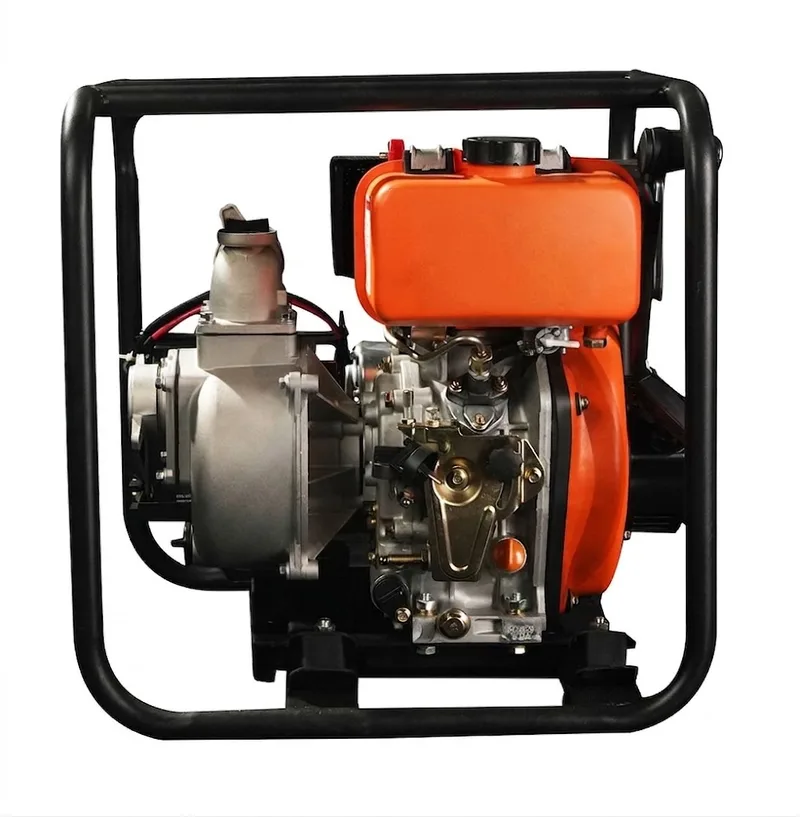
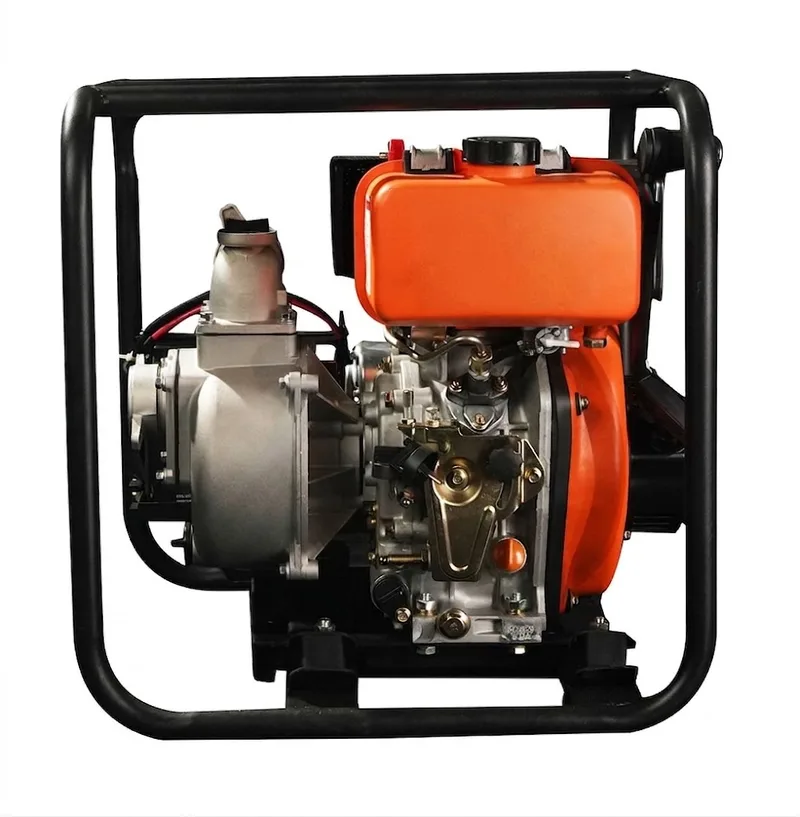
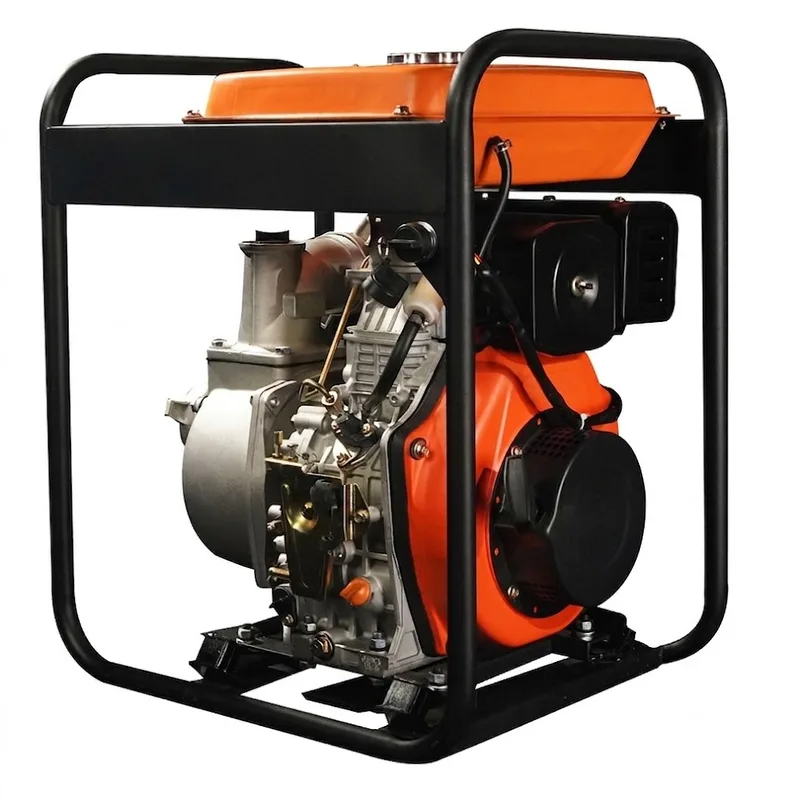
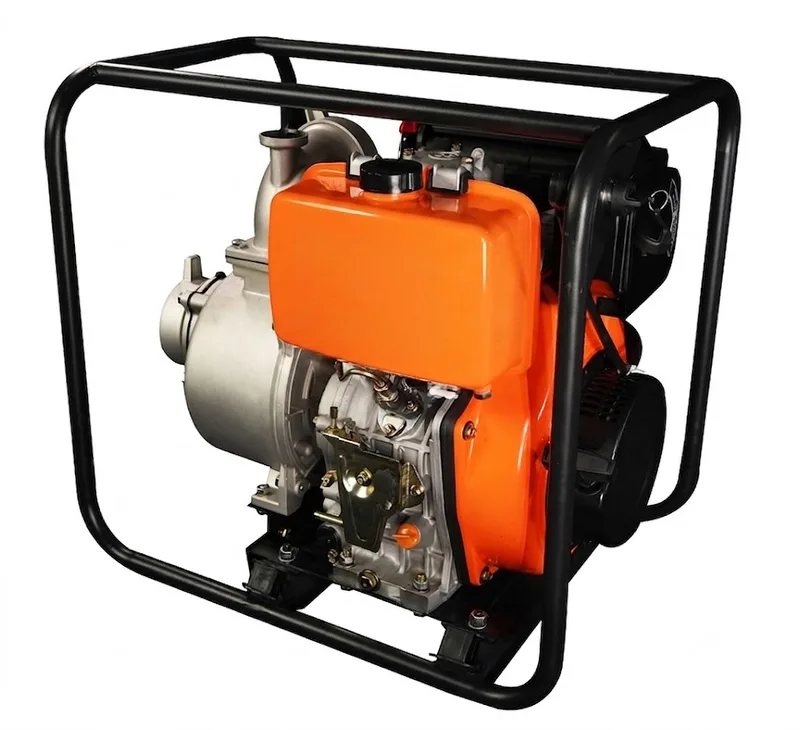
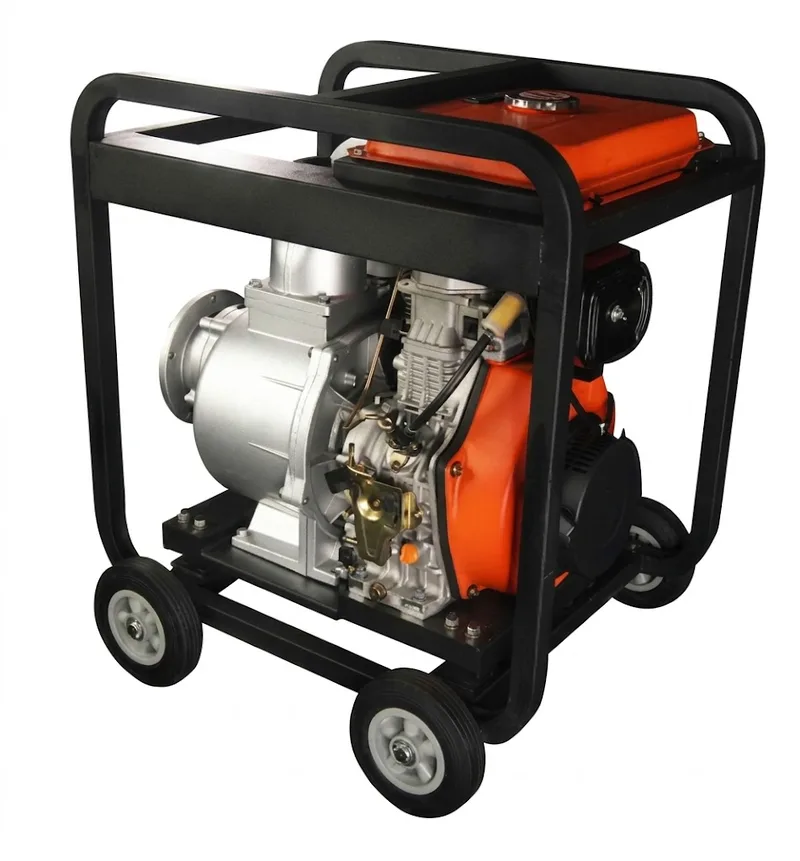
Recommended HTX equipment for this application:
What to check at the water source
- Suction lift. Our pumps are rated for 5 to 6 m of suction at sea level. Highland fields lose about 1 m for every 1,000 m of elevation. Place the pump low and close to the water.
- Long delivery lines. A 300 m line to the far plot can add more head than the lift itself. One pipe size up is often the cheapest fix.
- Engine at altitude. The engine loses power at altitude like any diesel. See diesel power at high altitude.
- Season-long running. Plan oil changes every 100 hours. A pump running 6 hours a day reaches that in about 17 days.
Questions irrigation buyers ask
What size diesel pump do I need for 1 hectare?
At 6 mm a day, one hectare needs 60 m³ of water. Pumped over 6 hours that is 10 m³/h. A 2-inch pump such as the HTX-WP20, rated 20 m³/h at 20 m head, covers it for furrow or drip.
Can a standard pump run sprinklers?
Usually not. Sprinklers need about 20 to 40 m of pressure on top of the lift and the pipe losses. A standard pump loses most of its flow at that head. Use a high-pressure pump such as the HTX-WP-HP20, rated 12 m³/h at 60 m.
How far can the pump be above the water?
Our pumps are rated for 5 to 6 m of suction lift at sea level. Subtract about 1 m for every 1,000 m of altitude, and keep the suction pipe short and wide.
Related guides
Need help choosing?
Our engineering team will match the right unit to your duty cycle and conditions.