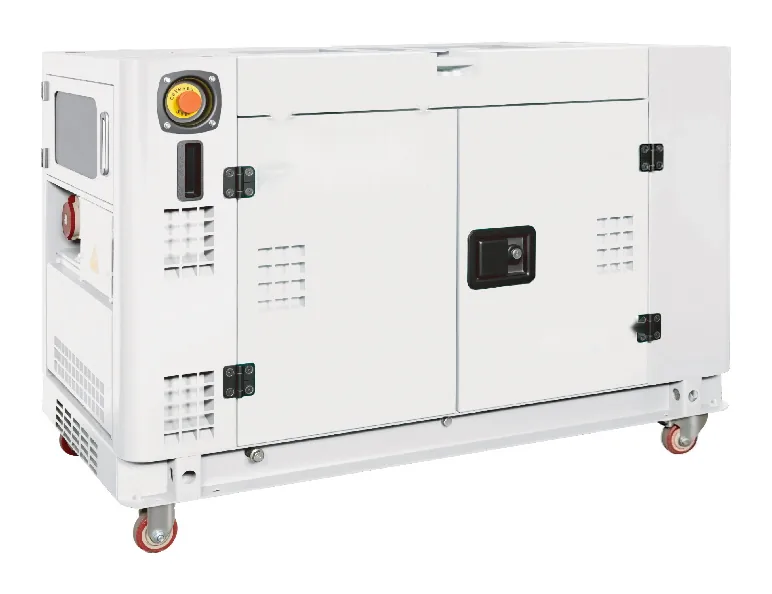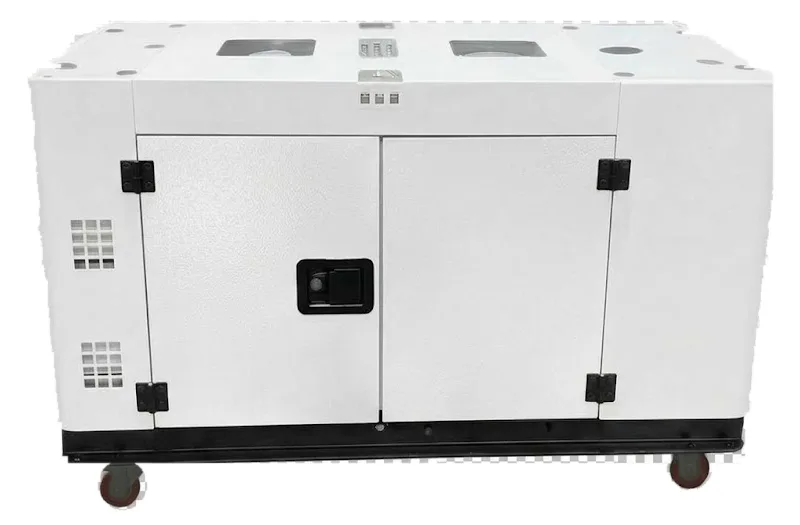
Rule of thumb: a diesel generator burns about 0.25–0.30 litres per kW per hour at full load. A 20 kVA set (≈16 kW) under heavy load uses about 4–5 litres an hour; at half load, closer to 2.5–3. That answers the question for most buyers. The figure that actually decides your fuel bill, though, is the load percentage, not the size on the datasheet. Here is how to make a proper estimate before you buy.
The quick table (50 Hz, 0.8 power factor)
| Set size | ≈ kW | At 50% load | At 75% load | At 100% load |
|---|---|---|---|---|
| 5 kVA | 4 kW | ~0.7 L/h | ~1.0 L/h | ~1.2 L/h |
| 10 kVA | 8 kW | ~1.3 L/h | ~1.9 L/h | ~2.4 L/h |
| 20 kVA | 16 kW | ~2.6 L/h | ~3.8 L/h | ~4.8 L/h |
| 30 kVA | 24 kW | ~3.9 L/h | ~5.6 L/h | ~7.2 L/h |
| 60 kVA | 48 kW | ~7.8 L/h | ~11 L/h | ~14 L/h |
| 80 kVA | 64 kW | ~10 L/h | ~14 L/h | ~18 L/h |
| 100 kVA | 80 kW | ~12 L/h | ~18 L/h | ~22 L/h |
Figures are at 50 Hz. A 60 Hz version of the same set runs at 3,600 rpm and usually produces more output. Its consumption per hour rises roughly in proportion, so the litres per kWh stay in the same range. Compare machines in L/kWh, not L/h.
Larger sets burn less fuel per unit of power, not more. This surprises buyers who expect consumption to scale directly with the nameplate. Specific fuel consumption improves as sets get larger and move from single-cylinder air-cooled engines to multi-cylinder water-cooled ones. Our own published figures show the trend:
| Class | Published specific consumption |
|---|---|
| 2.8–8.5 kVA, air-cooled single-cylinder | ~280 g/kW·h |
| 10 kVA, water-cooled | ~253 g/kW·h |
| 19–31 kVA, water-cooled three-phase | 235–240 g/kW·h |
| 55 kVA, water-cooled three-phase | ~225 g/kW·h |
At the same load percentage, a 100 kVA set does not use ten times the fuel of a 10 kVA set; it uses closer to nine times. The 80 and 100 kVA rows above use ~0.28 L/kWh at full load, in line with the larger-set range, while the smaller rows sit nearer 0.30.
These are planning figures based on the 0.25–0.30 L/kWh range. Every engine has its own published specific fuel consumption, often in g/kW·h. Use the manufacturer’s figure when you have it, and use the table as a cross-check. Every HTX generator product page states the g/kW·h figure, so you can check ours against the table yourself.
Reading the real specification: g/kW·h
Engine datasheets give fuel consumption in grams per kilowatt-hour. To convert to litres, divide by about 840 (the approximate density of diesel in g/L), then multiply by the kW you actually draw.
Example: an engine rated 245 g/kW·h running at 16 kW → 245 × 16 = 3,920 g/h ÷ 840 ≈ 4.7 L/h.
This is the reliable way to compare two machines. If a supplier cannot give you a g/kW·h figure, ask why before you compare prices.
Why load percentage decides your fuel bill
A diesel engine is most efficient at 70–85% load. Below that range, efficiency falls, and wasted fuel is only part of the cost:
- At 25–30% load, consumption per unit of useful power rises sharply, and the engine starts to suffer wet-stacking: unburned fuel and soot foul the exhaust, the injectors and the valves.
- At 100%+ load, consumption also rises steeply, and there is no margin left for a motor start.
This is the practical argument against buying “two sizes up to be safe”. An oversized generator spends its life in its least efficient range, burning extra fuel for power you do not use and shortening its own service life. Size for the corrected load plus 10–20% reserve. The method is in how to size a diesel generator, and the class-by-class overview is in the kVA size chart.
Calculating your real running cost
You need four figures:
- Average load (the kW you actually draw, not the nameplate figure)
- Consumption at that load (from the table or the g/kW·h specification)
- Hours per day of operation
- Local diesel price
A workshop draws 12 kW for 8 hours a day on a 20 kVA set: ~3.8 L/h × 8 = ~30 L/day. Multiply by your fuel price for the daily cost, then by the operating days for the month.
Do this calculation before you buy, not after. At sites that run long hours, a year’s fuel often costs more than the generator itself. That is why the efficient load range matters more than a small difference in purchase price.
Five things that increase consumption without warning
- Clogged air filter: the engine works harder for the same output. This is the cheapest fix on the list; the intervals are in the maintenance schedule.
- Worn or fouled injectors: poor atomization burns the fuel incompletely and causes smoke.
- Bad fuel: water and sediment degrade combustion and damage the injection system; see can bad diesel fuel damage your engine.
- Altitude: thin air means less complete combustion, so output drops and specific consumption rises (altitude derating).
- Constant light loading: the wet-stacking cycle described above, which makes the engine even less efficient.
What to ask a supplier
- What is the specific fuel consumption (g/kW·h) at 75% and 100% load?
- At what load percentage was the quoted figure measured?
- What is the set’s tank capacity, and how many hours does it last at my load?
With those three answers you can calculate running cost instead of relying on a brochure. HTX publishes engine specifications on every product page. Browse the diesel generator range, or the emergency power solutions page for standby sizing.
Want the fuel calculation for your actual duty cycle? Send us your load, daily running hours and site altitude, or message us on WhatsApp. Our engineers will reply within 24 business hours with consumption and tank run-time figures for the right set.